
Evaluate the Research Path – Prof. Noyal Wilson
Evaluate the Research Path – Prof. Noyal Wilson

This activity was implemented as a higher-order, analytical learning initiative for the course Consumer Behaviour and Marketing Research (CBMR), designed to develop students’ critical evaluation skills across different stages of the marketing research process.
Statement of Clear Goals of the Initiative
- To enable students to critically evaluate each stage of the marketing research process
- To enhance analytical and judgmental skills aligned with higher-order thinking
- To promote application of theoretical concepts to real-world business scenarios
- To develop problem-solving and decision-making capabilities
- To strengthen presentation, argumentation, and defence skills
Need Identification
While students are familiar with the steps of the marketing research process, they often lack the ability to critically evaluate its effectiveness in practical situations. Traditional teaching methods focus more on understanding and application, with limited emphasis on evaluation and judgment. This activity addresses the need to develop higher-order cognitive skills by engaging students in analyzing real-world scenarios, identifying gaps, and recommending improvements in research practices.
Description of the Initiative Used
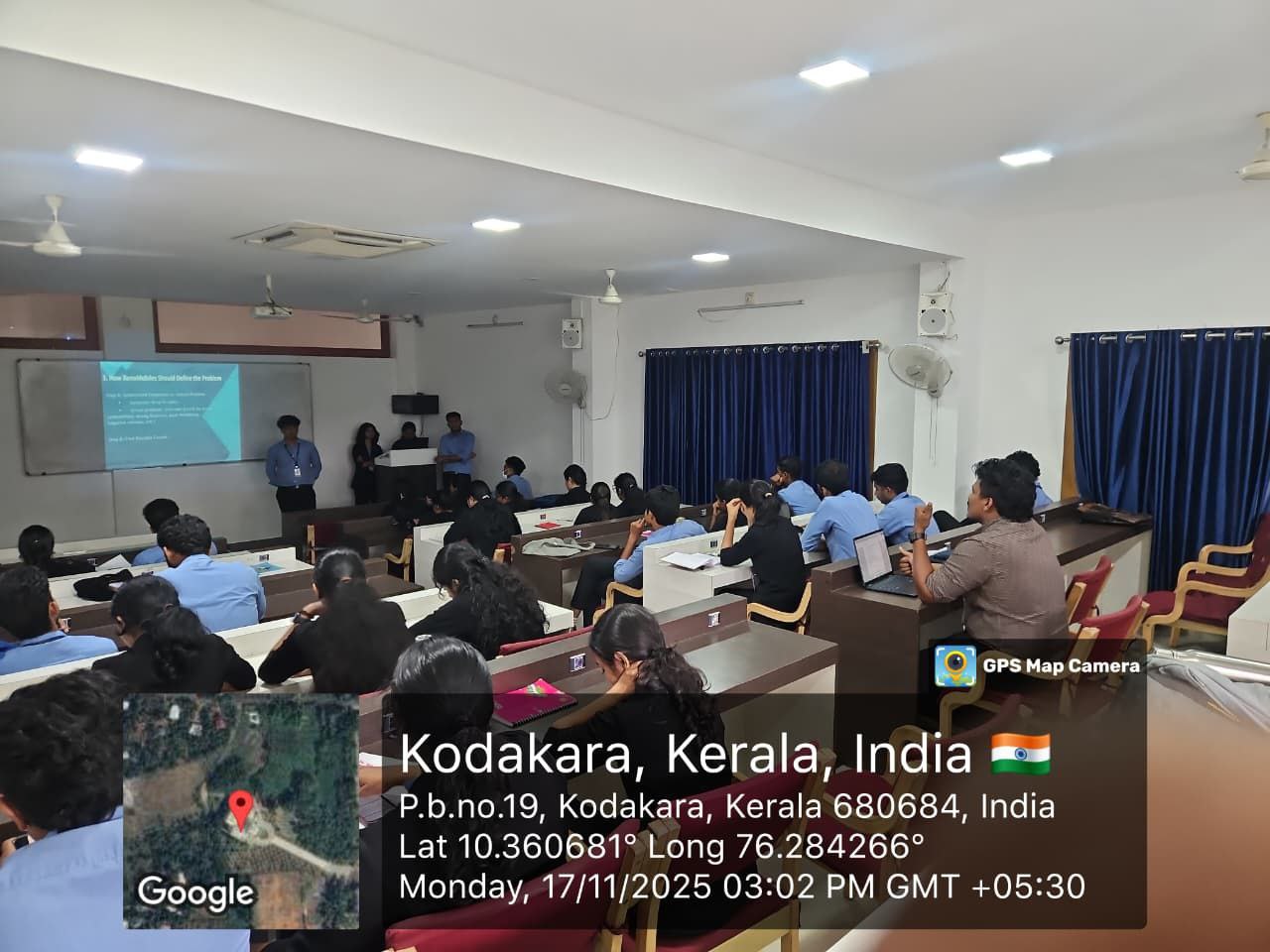
The “Evaluate the Research Path” activity is a group-based analytical exercise where students assess different stages of the marketing research process within specific business contexts.
Structure of Activity:
- Students are divided into 10 groups, each assigned a stage of the research process
- Each group is given a real-world business scenario (e.g., product failure, customer satisfaction study, ethical issues, AI in research, etc.)
- Students analyze how their assigned research stage is applied in the scenario
- They evaluate challenges, critique decisions, and propose improvements
- Each group presents their findings and participates in a Q&A defence session
Duration:
Conducted over a session including preparation and presentation
Tools/Techniques Used:
- Case analysis
- Critical evaluation frameworks
- Presentation tools
Assessment Strategy:
- Evaluation based on analytical depth, application, and presentation
Rubrics Applied (20 Marks):
- Understanding of assigned step – 5 marks
- Depth of evaluation and critical analysis – 5 marks
- Application to business scenario – 5 marks
- Presentation, teamwork, and defence – 5 marks
Industry Integration:
Uses real-world business scenarios reflecting actual marketing research challenges and decision-making contexts.
Innovation Component
- Focuses on higher-order thinking (evaluation and judgment) rather than basic understanding
- Integrates case-based learning with research methodology
- Encourages defence of arguments through interactive Q&A sessions
- Bridges the gap between academic concepts and real-world research practices
- Incorporates contemporary issues such as ethics and AI in marketing research
Significance of Results
Measurable Outcomes:
- Improved ability to critically evaluate marketing research processes
- Enhanced application of research concepts to business scenarios
- Development of structured analytical and reasoning skills
Qualitative Impact:
- Increased confidence in presenting and defending viewpoints
- Better understanding of real-world research challenges
- Development of critical thinking and decision-making capabilities
Student Feedback Summary
Overall Rating:
Highly Positive
Key Appreciations:
- Engaging and intellectually stimulating activity
- Exposure to real-world business scenarios
- Opportunity to develop critical thinking and presentation skills
Areas for Further Improvement:
- More time for deeper analysis and discussion
- Additional guidance for complex scenarios
Reflective Critique by Faculty
What Worked Well:
- Strong student engagement and active participation
- High level of analytical depth in group presentations
- Effective integration of theory with real-world application
Challenges Faced:
- Variations in analytical depth across groups
- Time constraints during presentations and Q&A sessions
Conclusion
The “Evaluate the Research Path” activity successfully enhanced higher-order cognitive skills by encouraging students to critically assess and justify marketing research practices. Through scenario-based analysis and interactive discussions, students developed deeper insights into research methodologies and their real-world applications. The activity effectively strengthened analytical thinking, decision-making, and communication skills, making it a valuable enrichment to the teaching–learning process.
Share This Story, Choose Your Platform!
Share This Story,
Evaluate the Research Path – Prof. Noyal Wilson
Evaluate the Research Path – Prof. Noyal Wilson
This activity was implemented as a higher-order, analytical learning initiative for the course Consumer Behaviour and Marketing Research (CBMR), designed to develop students’ critical evaluation skills across different stages of the marketing research process.
Statement of Clear Goals of the Initiative
- To enable students to critically evaluate each stage of the marketing research process
- To enhance analytical and judgmental skills aligned with higher-order thinking
- To promote application of theoretical concepts to real-world business scenarios
- To develop problem-solving and decision-making capabilities
- To strengthen presentation, argumentation, and defence skills
Need Identification
While students are familiar with the steps of the marketing research process, they often lack the ability to critically evaluate its effectiveness in practical situations. Traditional teaching methods focus more on understanding and application, with limited emphasis on evaluation and judgment. This activity addresses the need to develop higher-order cognitive skills by engaging students in analyzing real-world scenarios, identifying gaps, and recommending improvements in research practices.
Description of the Initiative Used
The “Evaluate the Research Path” activity is a group-based analytical exercise where students assess different stages of the marketing research process within specific business contexts.
Structure of Activity:
- Students are divided into 10 groups, each assigned a stage of the research process
- Each group is given a real-world business scenario (e.g., product failure, customer satisfaction study, ethical issues, AI in research, etc.)
- Students analyze how their assigned research stage is applied in the scenario
- They evaluate challenges, critique decisions, and propose improvements
- Each group presents their findings and participates in a Q&A defence session
Duration:
Conducted over a session including preparation and presentation
Tools/Techniques Used:
- Case analysis
- Critical evaluation frameworks
- Presentation tools
Assessment Strategy:
- Evaluation based on analytical depth, application, and presentation
Rubrics Applied (20 Marks):
- Understanding of assigned step – 5 marks
- Depth of evaluation and critical analysis – 5 marks
- Application to business scenario – 5 marks
- Presentation, teamwork, and defence – 5 marks
Industry Integration:
Uses real-world business scenarios reflecting actual marketing research challenges and decision-making contexts.
Innovation Component
- Focuses on higher-order thinking (evaluation and judgment) rather than basic understanding
- Integrates case-based learning with research methodology
- Encourages defence of arguments through interactive Q&A sessions
- Bridges the gap between academic concepts and real-world research practices
- Incorporates contemporary issues such as ethics and AI in marketing research
Significance of Results
Measurable Outcomes:
- Improved ability to critically evaluate marketing research processes
- Enhanced application of research concepts to business scenarios
- Development of structured analytical and reasoning skills
Qualitative Impact:
- Increased confidence in presenting and defending viewpoints
- Better understanding of real-world research challenges
- Development of critical thinking and decision-making capabilities
Student Feedback Summary
Overall Rating:
Highly Positive
Key Appreciations:
- Engaging and intellectually stimulating activity
- Exposure to real-world business scenarios
- Opportunity to develop critical thinking and presentation skills
Areas for Further Improvement:
- More time for deeper analysis and discussion
- Additional guidance for complex scenarios
Reflective Critique by Faculty
What Worked Well:
- Strong student engagement and active participation
- High level of analytical depth in group presentations
- Effective integration of theory with real-world application
Challenges Faced:
- Variations in analytical depth across groups
- Time constraints during presentations and Q&A sessions
Conclusion
The “Evaluate the Research Path” activity successfully enhanced higher-order cognitive skills by encouraging students to critically assess and justify marketing research practices. Through scenario-based analysis and interactive discussions, students developed deeper insights into research methodologies and their real-world applications. The activity effectively strengthened analytical thinking, decision-making, and communication skills, making it a valuable enrichment to the teaching–learning process.