Customer Persona Creation Workshop – Prof. Noyal Wilson
Customer Persona Creation Workshop – Prof. Noyal Wilson
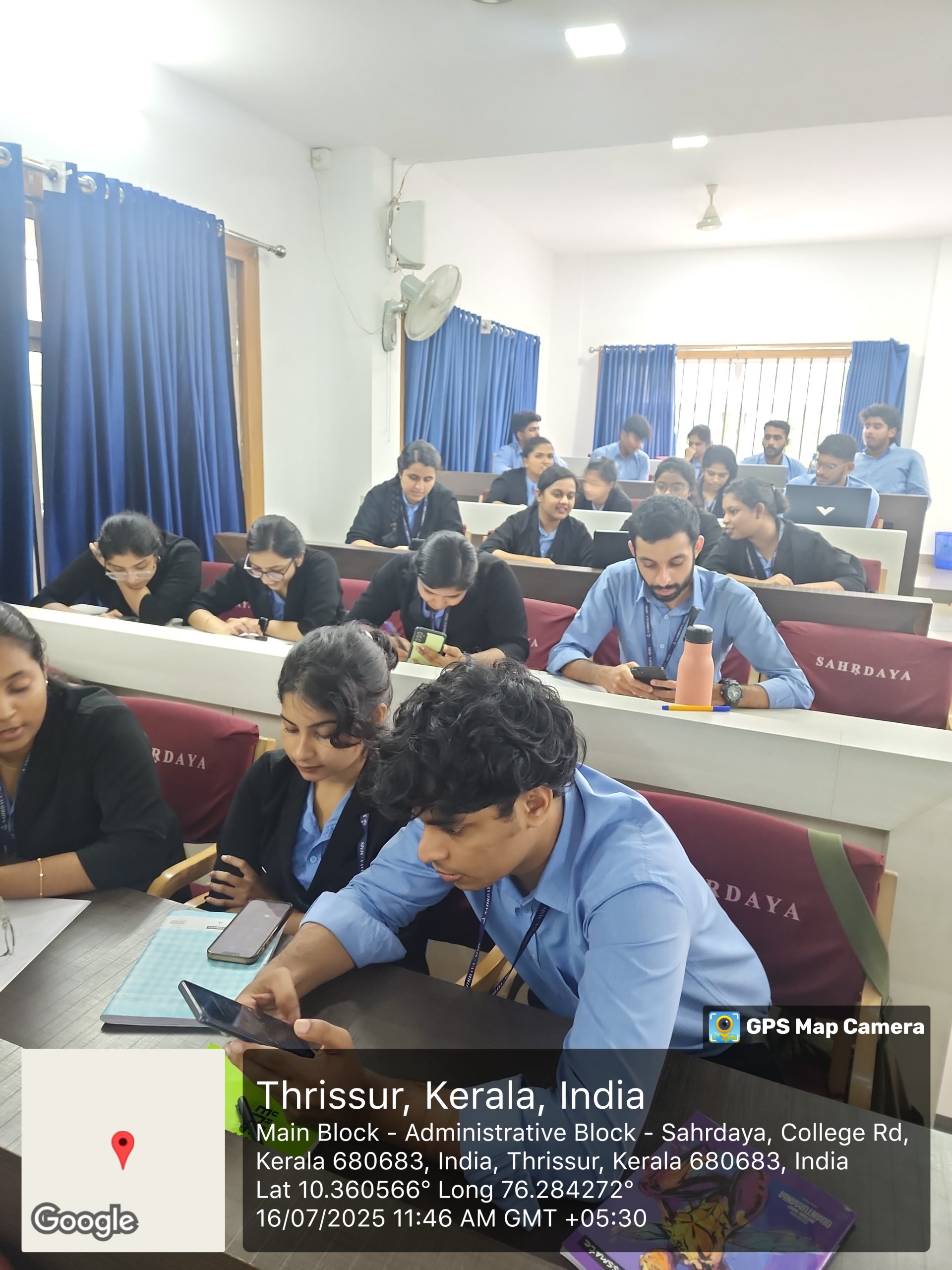
This activity was implemented as an interactive and creative learning initiative for the course Consumer Behaviour & Marketing Research, focusing on developing students’ ability to understand and visualize target customers through persona creation.
Statement of Clear Goals of the Initiative
- To enable students to develop customer personas based on market data and business scenarios
- To enhance understanding of segmentation, targeting, and consumer behaviour
- To foster creativity and visual communication using digital tools
- To promote critical thinking in identifying customer needs, motivations, and pain points
- To encourage teamwork and collaborative learning
Need Identification
Students often learn segmentation and consumer behaviour concepts theoretically, but face difficulty in visualizing real customers and applying these concepts in practical marketing contexts. There was a need for a creative and application-oriented activity that helps students translate abstract customer data into meaningful, actionable personas. This initiative addresses the gap by integrating design thinking with marketing analysis.
Description of the Initiative Used
The activity involved students working in teams to design detailed customer personas using Canva, based on given business scenarios.
Structure of Activity:
- Students were divided into teams of 3–4 members
- Each team was assigned a business scenario (e.g., skincare brand, edtech platform, e-scooter service, etc.)
- Teams analyzed the scenario and created a customer persona including:
- Demographics and occupation
- Personality traits and motivations
- Goals and pain points
- Buying behaviour and preferred platforms
- Teams designed visually appealing personas using Canva templates
- Each group presented their persona and justified their decisions
Duration:
30 minutes (creation) + presentation time
Tools/Software Used:
- Canva (for persona design and visualization)
Assessment Strategy:
- Evaluation based on creativity, relevance, and strategic alignment of personas
Rubrics Applied:
- Accuracy and depth of customer understanding
- Creativity and visual presentation
- Strategic relevance to the business scenario
- Team collaboration and presentation quality
Industry Integration:
Reflects real-world marketing practices where businesses use customer personas for targeting and strategy development.
Innovation Component
- Integrates design thinking with marketing concepts
- Uses Canva as a digital tool to enhance creativity and visualization
- Encourages learning by creating rather than memorizing
- Combines analytical thinking with visual storytelling
- Provides exposure to industry practices like persona building and customer profiling
Significance of Results
Measurable Outcomes:
- Improved ability to create structured and meaningful customer personas
- Enhanced understanding of segmentation and targeting strategies
- Increased student engagement and participation
Qualitative Impact:
- Better visualization of target customers and their behavior
- Improved creativity and communication skills
- Stronger linkage between theoretical concepts and practical marketing application
Student Feedback Summary
Overall Rating:
Highly Positive
Key Appreciations:
- Creative and engaging activity format
- Use of Canva for visual learning
- Practical understanding of customer profiling
Areas for Further Improvement:
- More time for detailed persona development
- Inclusion of real data for deeper analysis
Reflective Critique by Faculty
What Worked Well:
- High levels of creativity and student involvement
- Effective application of marketing concepts
- Strong quality of presentations and insights
Challenges Faced:
- Time constraints for detailed persona creation
- Variations in students’ familiarity with Canva
Conclusion
The Customer Persona Creation activity using Canva effectively transformed theoretical marketing concepts into a creative and application-oriented learning experience. By engaging students in designing and presenting customer personas, the activity enhanced their ability to analyze consumer behaviour and develop targeted marketing strategies. The integration of digital tools and collaborative learning significantly improved engagement and conceptual clarity, making it a valuable addition to modern teaching–learning practices.
Share This Story, Choose Your Platform!
Share This Story,
Customer Persona Creation Workshop – Prof. Noyal Wilson
Customer Persona Creation Workshop – Prof. Noyal Wilson
This activity was implemented as an interactive and creative learning initiative for the course Consumer Behaviour & Marketing Research, focusing on developing students’ ability to understand and visualize target customers through persona creation.
Statement of Clear Goals of the Initiative
- To enable students to develop customer personas based on market data and business scenarios
- To enhance understanding of segmentation, targeting, and consumer behaviour
- To foster creativity and visual communication using digital tools
- To promote critical thinking in identifying customer needs, motivations, and pain points
- To encourage teamwork and collaborative learning
Need Identification
Students often learn segmentation and consumer behaviour concepts theoretically, but face difficulty in visualizing real customers and applying these concepts in practical marketing contexts. There was a need for a creative and application-oriented activity that helps students translate abstract customer data into meaningful, actionable personas. This initiative addresses the gap by integrating design thinking with marketing analysis.
Description of the Initiative Used
The activity involved students working in teams to design detailed customer personas using Canva, based on given business scenarios.
Structure of Activity:
- Students were divided into teams of 3–4 members
- Each team was assigned a business scenario (e.g., skincare brand, edtech platform, e-scooter service, etc.)
- Teams analyzed the scenario and created a customer persona including:
- Demographics and occupation
- Personality traits and motivations
- Goals and pain points
- Buying behaviour and preferred platforms
- Teams designed visually appealing personas using Canva templates
- Each group presented their persona and justified their decisions
Duration:
30 minutes (creation) + presentation time
Tools/Software Used:
- Canva (for persona design and visualization)
Assessment Strategy:
- Evaluation based on creativity, relevance, and strategic alignment of personas
Rubrics Applied:
- Accuracy and depth of customer understanding
- Creativity and visual presentation
- Strategic relevance to the business scenario
- Team collaboration and presentation quality
Industry Integration:
Reflects real-world marketing practices where businesses use customer personas for targeting and strategy development.
Innovation Component
- Integrates design thinking with marketing concepts
- Uses Canva as a digital tool to enhance creativity and visualization
- Encourages learning by creating rather than memorizing
- Combines analytical thinking with visual storytelling
- Provides exposure to industry practices like persona building and customer profiling
Significance of Results
Measurable Outcomes:
- Improved ability to create structured and meaningful customer personas
- Enhanced understanding of segmentation and targeting strategies
- Increased student engagement and participation
Qualitative Impact:
- Better visualization of target customers and their behavior
- Improved creativity and communication skills
- Stronger linkage between theoretical concepts and practical marketing application
Student Feedback Summary
Overall Rating:
Highly Positive
Key Appreciations:
- Creative and engaging activity format
- Use of Canva for visual learning
- Practical understanding of customer profiling
Areas for Further Improvement:
- More time for detailed persona development
- Inclusion of real data for deeper analysis
Reflective Critique by Faculty
What Worked Well:
- High levels of creativity and student involvement
- Effective application of marketing concepts
- Strong quality of presentations and insights
Challenges Faced:
- Time constraints for detailed persona creation
- Variations in students’ familiarity with Canva
Conclusion
The Customer Persona Creation activity using Canva effectively transformed theoretical marketing concepts into a creative and application-oriented learning experience. By engaging students in designing and presenting customer personas, the activity enhanced their ability to analyze consumer behaviour and develop targeted marketing strategies. The integration of digital tools and collaborative learning significantly improved engagement and conceptual clarity, making it a valuable addition to modern teaching–learning practices.